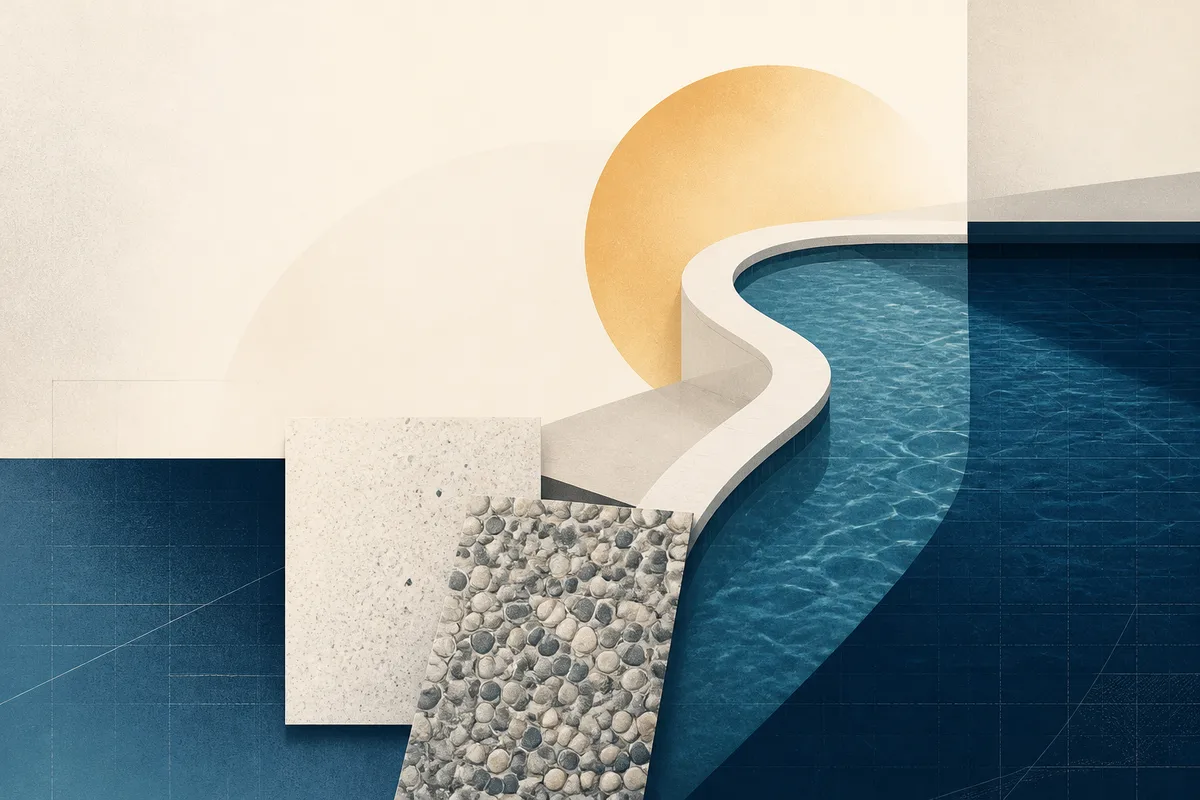
The Florida Sun Paradox: Choosing Between Quartz and Pebble for Greater Orlando Pools
Homeowners in Winter Park often mistake surface texture for surface quality. While traditional plaster fails rapidly under the Central Florida sun, aggregate finishes use fortified cement and stone to resist the aggressive oxidation caused by constant UV rays and high chlorine demand. The choice between quartz and pebble isn't just about aesthetics; it is a calculation of how many times a pool will require resurfacing over a thirty-year period.
This guide breaks down the operational differences between quartz and pebble aggregates. These materials react differently to the specific thermal expansion cycles found in Greater Orlando. Whether managing a high-traffic rental in Kissimmee or a private estate in Windermere, these criteria will define the maintenance budget for the next two decades.
Why Standard Pool Surfaces Fail in Central Florida
The combination of porous cement and intense solar radiation creates a cycle of degradation that few materials can withstand. In the Orlando climate, the following factors accelerate surface failure:
- High UV indexes break down organic pigments in standard plaster, leading to uneven mottling and bleaching.
- Elevated water temperatures increase the rate of chemical reactions, making the surface more susceptible to calcium scaling and etching.
- Thermal shock from afternoon thunderstorms can cause micro-cracking in less flexible, non-aggregate finishes.
- Constant evaporation necessitates frequent water top-offs, which introduces mineral imbalances that erode the finish.
Selecting the Right Aggregate Strategy
1Evaluate the Longevity Requirements
Pebble finishes are widely considered a highly durable pool surface due to the high ratio of stone to cement. While quartz finishes generally last 12 to 18 years, pebble finishes typically last 15 to 20 years in Florida's climate. poolcreationsfl.com If the goal is a long-term installation, pebble is a logical choice.
2Assess Bather Sensitivity and Texture
Texture is a primary trade-off when comparing a quartz vs pebble pool finish. Quartz consists of crushed grains that result in a finish nearly as smooth as traditional plaster. facebook.com Traditional pebble finishes use natural stones that provide a slip-resistant feel but can be rough for a while. facebook.com
3Analyze Chemical and Stain Resistance
Pebble finishes excel in environments where water chemistry might fluctuate, as the stone aggregate is difficult to etch or stain. Quartz Pool Finishes offer significantly better protection than plain plaster, but because there is more exposed cement between the quartz grains, they remain slightly more vulnerable to staining from leaves or metal runoff than a dense pebble matrix.
4Factor in Long-Term Color Retention
UV stability is a major concern for Orlando residents. According to the SGM Guide, choosing between quartz, pebble, and plaster represents one of the most important decisions in pool construction. Pebble finishes rely on the natural colors of the stones themselves—earthy browns, blues, and greens—which do not fade like organic pigments, ensuring the pool maintains its look over time.
The UV-Resistance Mechanism
The durability of these surfaces stems from the "exposure" process during installation. When a crew applies an aggregate finish, they wash away the top layer of cement paste to reveal the stone underneath. In a pebble finish, stone covers a significant portion of the visible surface, shielding the vulnerable cement binder from the sun. Quartz finishes use a smaller aggregate that remains partially embedded, meaning more cement is exposed to the water and UV rays. This is why pebble is often cited as a superior choice for direct sunlight environments.
The measurement of stone surface area versus cement binder, which determines the material's total resistance to chemical etching.
How Orlando Pool Resurface Helps
A professional resurfacing project begins with a total removal of the old, compromised layer to ensure the new aggregate bonds correctly to the gunite shell. A typical scope of work involves water blasting or chipping away the existing surface, repairing any underlying structural cracks, and applying a dedicated bond coat. For owners in Orange County, a sound scope should also include a review of the tile and coping, as these elements often reach the end of their lifespan simultaneously with the pool interior. Readers looking to start this process can request a detailed assessment through the quote page or by calling (689) 305-2500.
Frequently asked questions
Does a pebble finish require different chemistry than quartz?
The chemical parameters for LSI (Langelier Saturation Index) balance remain the same for both finishes, but pebble is far more forgiving of mistakes. If the pH drops too low, a quartz surface may show signs of etching much sooner than a pebble surface would.
Is the texture of pebble too rough for children?
While traditional pebble uses larger stones, modern variants use smaller, polished aggregates to bridge the gap between quartz and pebble. aeoutdoorliving.com This provides the durability of stone with a texture that is comfortable for long periods of play.
How long does the resurfacing process take in Orlando?
The duration of a resurfacing project depends on the size of the pool and the extent of the necessary preparation. This includes the prep phase, the application of the finish, and the mandatory acid wash or polish before the pool is refilled. Weather conditions can also impact the onsite timeline.
Will quartz or pebble help keep my pool water cooler?
The material type has less impact on water temperature than the color of the finish. Darker pebble or quartz finishes absorb more solar heat, which can raise water temperatures compared to a light-colored "White Quartz" or "Sky Blue" finish.
Why is pebble more expensive than quartz?
The cost difference is driven by both the raw material price of the stones and the labor-intensive application process. PebbleTec is a brand name that typically adds to the overall cost. facebook.com
Do I need to acid wash a pebble pool every year?
No, a well-maintained pebble pool should rarely need an acid wash. An acid wash should only be considered if there is significant calcium scaling or mineral staining that cannot be removed through standard chemical balancing.
What happens when you get in touch: you describe the situation, we ask the few questions that actually change the answer, and you get a clear scope and next step — no obligation.