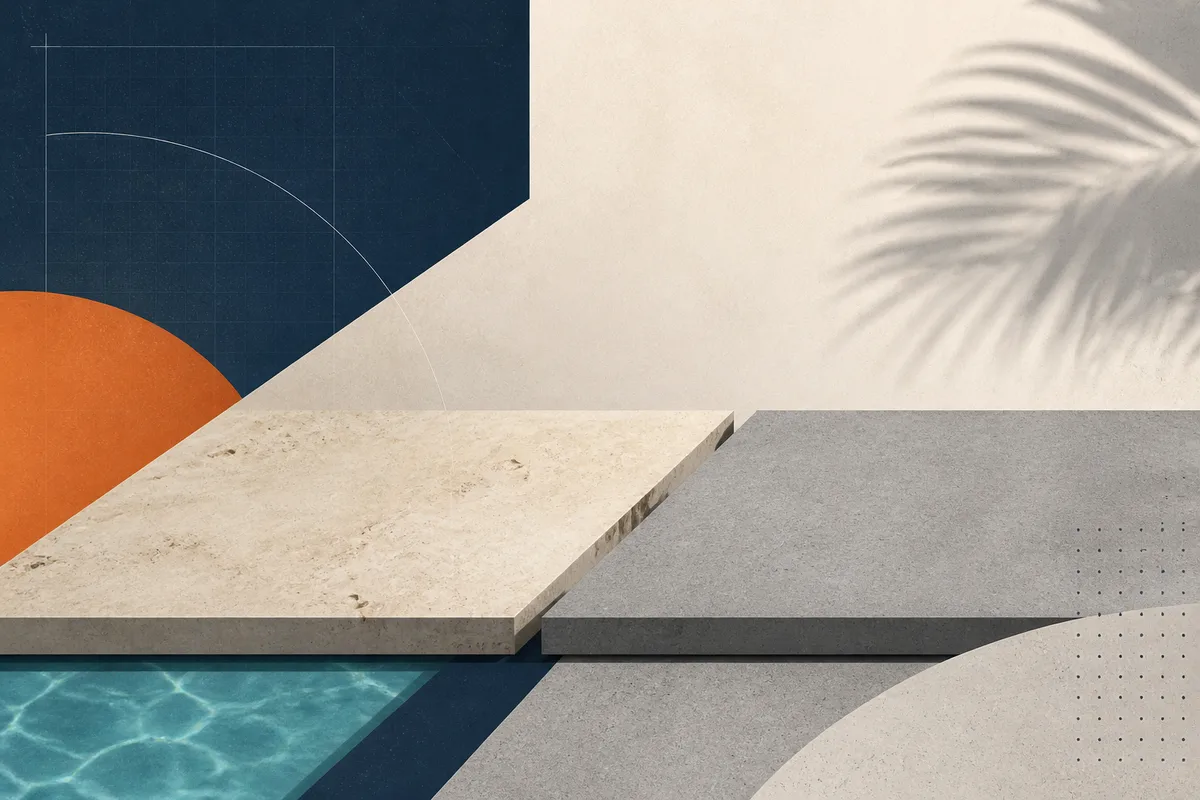
Natural Stone vs. Concrete: Finding the Coolest Pool Deck Material for Hot Climates
Florida pool owners often discover too late that a beautiful deck can become a safety hazard by midday. While traditional concrete is durable, its density allows it to soak up solar radiation. In high-sun environments like Winter Park, the "barefoot experience" depends less on the aesthetics of the stone and more on its ability to dissipate heat through light reflection and its naturally porous structure according to beyondbackyardliving.com.
This guide compares the thermal performance of travertine against standard concrete pavers to determine the coolest pool deck material for hot climates. Specific mineral compositions resist the heat of the Central Florida sun, allowing property owners to transition from scorched concrete to a more comfortable outdoor living space.
Why Standard Decking Fails the Barefoot Test
Heat retention in pool decking is a function of thermal conductivity and heat capacity. Most common materials fail to remain cool because they are engineered for structural density rather than thermal regulation.
- High-density concrete lacks the internal air pockets necessary to slow the transfer of heat from the surface to the core of the paver.
- Darker pigments in modern pavers absorb a broader spectrum of solar energy, converting light into trapped heat.
- Non-porous surfaces prevent moisture from the pool or humidity from evaporating, a process that naturally lowers stone temperature.
- Sealed surfaces often create a greenhouse effect within the material, trapping heat beneath a chemical barrier.
The Playbook for a Heat-Resistant Pool Deck
1Prioritize Porosity over Density
Travertine is naturally light-colored and porous, which allows it to reflect the sun and shed heat rather than absorbing it as noted by lakewoodranchconcretefl.com. This natural stone structure ensures the material retains less heat, resulting in a cooler surface that is beneficial for barefoot traffic.
2Select High Light-Reflectance Values
The color of the deck is a significant factor in heat absorption. White, ivory, and light walnut shades reflect the majority of the solar spectrum. When planning a pool deck resurfacing project, choosing a light-toned natural stone can reduce surface temperatures compared to dark grey or charcoal pavers.
3Account for Local Soil and Moisture
Florida's geology often presents problem soils containing expansive clays that can shift during heavy rainfall or drought. A heat-resistant deck must be installed with a sub-base that allows for drainage. If water cannot move through the material, the cooling benefits of porous stone are neutralized by the heat-retaining properties of trapped groundwater.
4Optimize the Finish for Airflow
Tumbled finishes are superior to polished surfaces for heat management. A textured surface increases the total surface area of the stone, allowing more air to move across it and carry away thermal energy. This texture also provides necessary slip resistance in wet environments.
The Mechanism of Thermal Dissipation
The reason travertine is widely considered the best surface for lanai barefoot comfort lies in its natural thermal regulation. This makes it the premier choice for heat comfort on sunny Florida pool decks according to manasotaonline.com. Because travertine is a porous stone, it stays measurably cooler in direct South Florida sun than most concrete pavers as reported by landscapinghomestead.com.
Even when the 7-Day Forecast for Winter Park indicates high temperatures, the temperature delta between light travertine and dark concrete pavers remains significant. While concrete may continue to hold heat, light and porous materials like travertine have the strongest reputation for staying cool underfoot according to helmoutdoorsolutions.com.
How Orlando Pool Resurface Helps
Upgrading a pool deck requires a clear understanding of the existing footprint and the condition of the pool shell. A typical scope of work begins with an assessment of the current deck's structural integrity, followed by the removal of failing coatings or cracked concrete. For those also considering pool replastering, coordinating the deck and interior finish ensures a cohesive thermal and aesthetic result. Homeowners should prepare by identifying areas of standing water or shifting pavers, which indicate sub-base issues that must be addressed before new heat-resistant materials are laid. For a professional evaluation of an outdoor space, call (689) 305-2500 to discuss the specific requirements of the property.
Frequently asked questions
Does sealing travertine make it hotter?
Standard high-gloss topical sealers can increase surface temperature by creating a non-porous film that traps heat. To maintain the cooling properties of the stone, a penetrating, breathable sealer is typically used, which protects against stains without blocking the stone's natural ability to "breathe" and dissipate thermal energy.
Can I install travertine over my existing concrete deck?
It is possible to thin-set travertine pavers over a concrete slab if the existing surface is structurally sound and properly sloped for drainage. However, if the concrete is significantly cracked or settling, these issues will eventually telegraph through to the new stone, requiring the old deck to be removed first.
How much cooler is travertine than concrete?
While specific temperatures vary based on sun exposure, travertine is known for its cool surface and its ability to stay cool underfoot even in direct sunlight according to sources on facebook.com. In the peak afternoon sun, this difference often determines whether a deck is walkable or requires footwear.
Is cool deck coating as effective as natural stone?
Acrylic "cool deck" coatings are designed to reflect heat and use texture to reduce skin contact, but they are a topical solution. While effective, they do not offer the same longevity or natural thermal insulation provided by the physical thickness and porosity of a one-inch-thick travertine paver.
Does the thickness of the stone affect the temperature?
Thicker pavers generally have more thermal mass, but in the case of travertine, the porosity offsets this. A thicker stone is often more desirable for a pool deck as it provides greater structural stability and resists cracking during the minor soil shifts common in Central Florida.
Will light-colored stones show more stains?
Light-colored natural stone is more susceptible to showing organic stains like leaves or tannins. However, because travertine is naturally reactive to mild cleaning agents and can be pressure washed, maintaining the bright, heat-reflective surface is manageable with routine seasonal care.
What happens when you get in touch: you describe the situation, we ask the few questions that actually change the answer, and you get a clear scope and next step — no obligation.