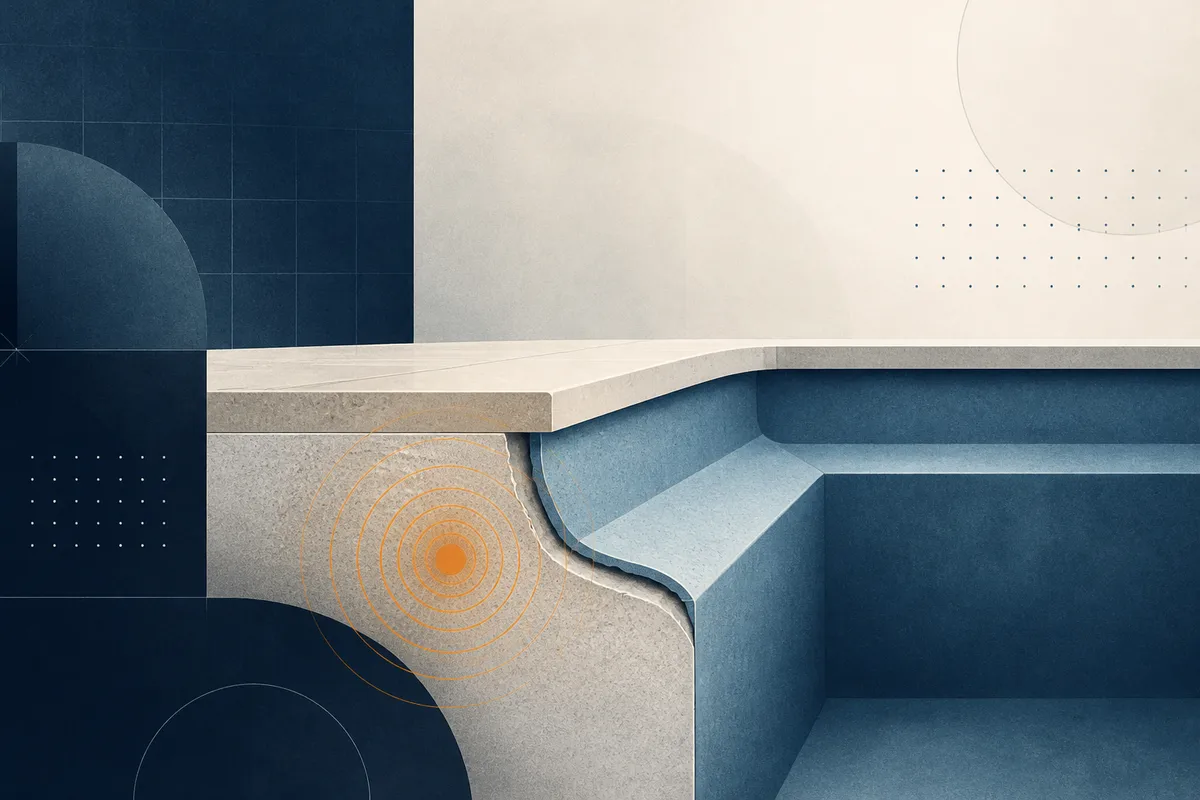
Identifying Hollow Spots: The Tap-Test Guide to Pool Shell Delamination
Pool plaster does not typically fail from the outside in; it fails from the bond wire out. While many owners in Winter Park assume surface rough spots are just age, a hollow sound when stepping on the floor indicates a total mechanical failure between the finish and the gunite shell. When the bond breaks, water fills the gap, creating pressure that eventually forces the plaster to crack or "pop off" in large, jagged chunks.
This guide provides a systematic framework for homeowners to audit their pool shell integrity. By identifying these subsurface voids early, you can differentiate between cosmetic etching and a systemic failure that necessitates a comprehensive pool replastering project.
Why Pool Plaster Bond Failure Occurs
Plaster is a sacrificial layer designed to waterproof the porous concrete shell, but it relies entirely on a mechanical bond to stay submerged. In Central Florida, several factors accelerate the separation of these layers:
- Improper surface preparation during the previous application, such as failing to remove all old plaster or bond coat.
- Significant temperature swings that cause the two materials to expand and contract at different rates.
- Groundwater pressure fluctuations that can stress the shell, particularly in regions with complex soil profiles like those mapped by the Florida Geological Survey.
- Chemical imbalances that allow water to penetrate the plaster and attack the bond interface directly.
The DIY Tap-Test Playbook
You do not need specialized sonar to find voids; you only need a solid object and a quiet afternoon. Follow these steps to map the health of your pool interior.
1Use a Tool with Constant Density
Select a heavy wooden broom handle or a dedicated plastic tapping rod. Avoid using metal hammers or heavy tools that could chip a finish that is still structurally sound. The goal is to produce a vibration that resonates through the plaster into the shell.
2Establish a Baseline Sound
Find a section of the pool that looks pristine, usually on the upper steps or the shallow end floor. Tap firmly but gently; a healthy bond will produce a sharp, solid sound. This is the sound of energy transferring directly into the thick concrete shell.
3Move in a Grid Pattern
Walk the perimeter of the shallow end and move toward the deep end, tapping every two feet. Pay close attention to areas near the floor inlets, lights, and the transition point where the wall meets the floor (the cove). These are high-stress areas where delamination often starts.
4Listen for the Drum Effect
When you hit a delaminated spot, the sound will change to a hollow, dull, or drum-like sound (minibuckettest.com). If you find a hollow spot, tap outward from the center to find the edges of the void and visualize its size.
The Physics of Subsurface Voids
A delaminated area is essentially a water-filled blister under high pressure. Because the plaster is no longer supported by the gunite, it becomes brittle. If a heavy swimmer steps on a large hollow spot, the plaster can flex and shatter. This creates "pop-offs," which are sharp enough to cut feet and provide a breeding ground for black algae that cannot be reached by standard chlorine levels.
In areas like Winter Park, localized environmental factors can influence shell stability. The long-term cycle of Florida's wet and dry seasons creates a "push-pull" effect on pool shells. If the plaster bond is weak, this movement eventually snaps the connection.
How Orlando Pool Resurface Helps
Assessing a pool for resurfacing involves more than just a visual check. A professional evaluation typically includes a full-pool sounding to determine if the existing finish must be completely chipped out down to the original gunite. If a contractor suggests replastering over old plaster, they must first ensure the old layer is 100% bonded. A sound scope of work for a failing pool should clearly define the square footage of delamination removal and the specific bond kote application intended to fuse the new finish to the shell.
Frequently asked questions
Can I just patch a single hollow spot?
Small patches are possible but rarely permanent. If one area has delaminated, it is usually a sign that the entire bond layer is reaching the end of its life cycle. A patch may hold for a season, but new hollow spots often appear adjacent to the repair within months.
How long does it take for a pool to delaminate?
The lifespan of a finish varies based on application and maintenance. However, delamination occurs when the finish separates from the concrete shell or bond coat, which can happen if the original bond was poor or if water chemistry issues allow penetration to the bond interface (universalcement.com). If you notice hollow spots early in a pool's life, it points to a significant application error or an issue with the original bond coat.
Is a hollow spot a structural emergency?
Usually, no, but it is a functional emergency. While the pool will still hold water because of the gunite shell, the plaster is no longer protecting that shell. Over time, water behind the plaster can cause the rebar inside the concrete to rust and expand, leading to much more expensive structural cracks.
Why does my pool sound hollow only in the shallow end?
The shallow end floor and the "tanning ledge" receive the most UV exposure and heat when the pool is partially drained or during low-water events. This thermal stress makes these areas more prone to expanding and popping away from the cooler concrete beneath.
Does the tap test work if the pool is empty?
Yes, and it is actually easier to hear the hollow resonance when the pool is dry. However, be cautious when walking on a dry, delaminated floor, as your body weight can easily crack the unsupported plaster layers.
Will a new pebble finish fix the hollow spots?
A new finish will only be as strong as the surface it is bonded to. Any competent contractor will insist on chipping away all delaminated plaster before applying a new quartz or pebble finish to ensure the new investment doesn't peel off.
What happens when you get in touch: you describe the situation, a professional asks the few questions that actually change the answer, and you get a clear scope and next step — no obligation.